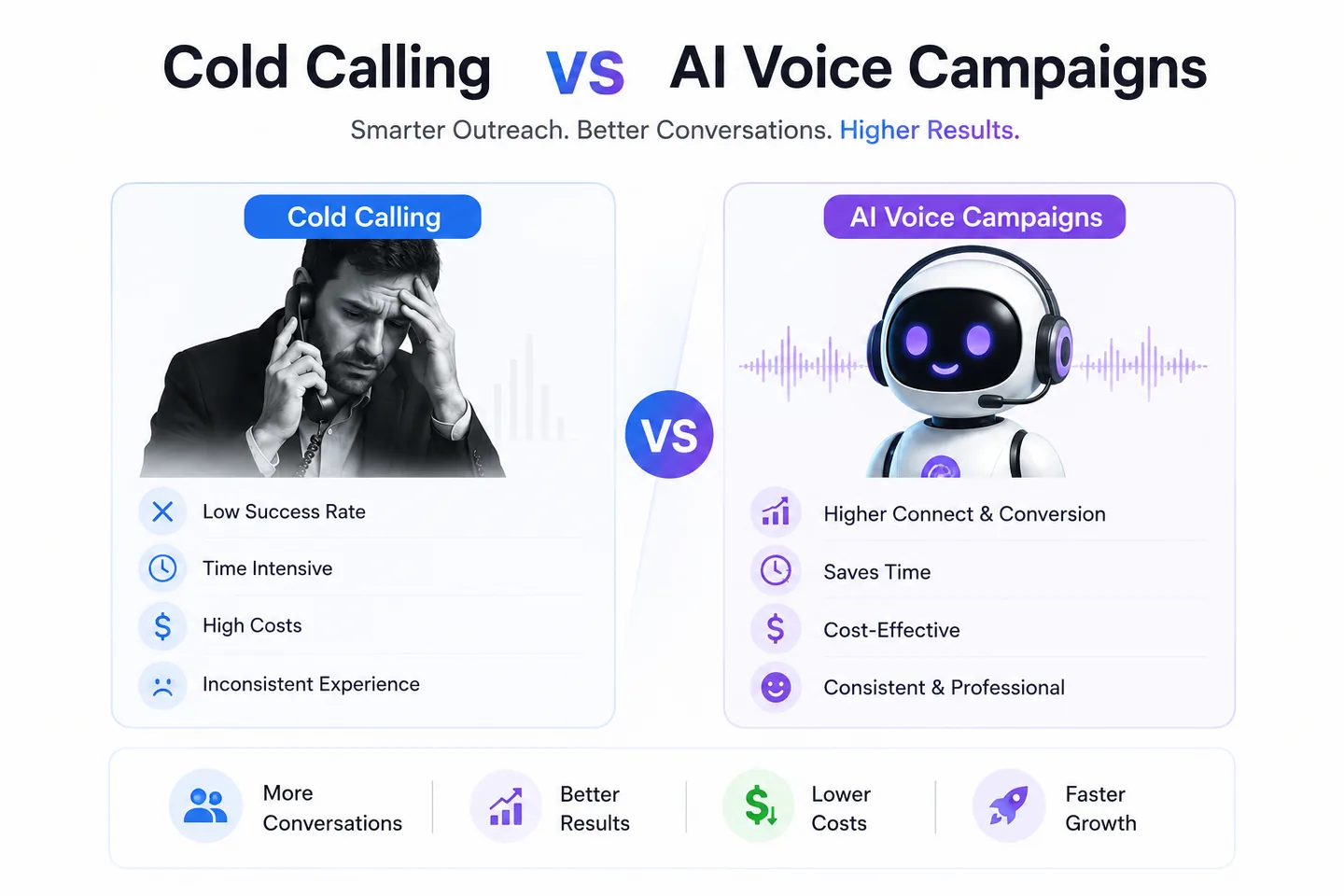
In the world of sales and marketing, the art of reaching out to potential customers is a constantly evolving game. For years, the classic "cold call" reigned supreme, but now, we're seeing the rise of AI-powered voice call campaigns. Both approaches aim to connect with prospects, but they achieve it in vastly different ways. This post will delve into the differences, weighing the pros and cons of each, to help you decide which strategy best aligns with your business goals.
What Exactly is Cold Calling?*
Cold calling is the traditional method of reaching out to prospects who have had no prior interaction with your company. It involves a human representative directly contacting individuals or businesses via telephone, often using a script as a guide. The aim is to spark interest, qualify leads, and ultimately, schedule a meeting or make a sale.
Pros of Cold Calling:
Cons of Cold Calling:
- Time-Consuming: Making hundreds of calls each day is labor-intensive and can be draining for sales teams.
- Inconsistency: Call quality can vary widely depending on the skills and motivation of the individual rep.
- High Rejection Rates: Cold calls are often met with rejection, which can impact morale and productivity.
- Costly: Hiring and maintaining a large sales team can be a significant financial burden.
The Rise of AI Voice Call Campaigns
AI voice call campaigns use automated systems powered by artificial intelligence to initiate outbound calls. These campaigns typically involve pre-recorded messages, or even AI-generated personalized scripts, and can direct prospects to specific actions, such as leaving a message, visiting a website, or speaking with a human agent.
Beyond personalized interactions, conversational AI platforms are revolutionizing the efficiency of customer service operations. AI voice bots can automate a wide range of tasks, streamlining service processes and freeing up human agents to focus on more complex and nuanced issues. This automation includes:
Pros of AI Voice Call Campaigns:
- Scalability: AI systems can make hundreds or thousands of calls simultaneously, significantly increasing outreach.
- Consistency: Messages are delivered uniformly, ensuring every prospect receives the same information.
- Cost-Effective: Automation reduces the need for a large sales team, lowering operational costs.
- 24/7 Availability: Automated systems can operate around the clock, allowing for outreach across different time zones.
Cons of AI Voice Call Campaigns:
- Lack of Personalization: AI may struggle to deviate from the script, handle unexpected responses, or address complex issues effectively.
- Limited Adaptability: A AI may struggle to deviate from the script, handle unexpected responses, or address complex issues effectively.
- Potential for Impersonal Tone: Automated voices can sometimes sound robotic and impersonal, leading to lower engagement.
Which Strategy is Right for You?
The optimal approach often depends on your specific goals, budget, and industry.
Boosting Customer Satisfaction Across the Board:
Cold Calling is Best For:
- When immediate feedback and human flexibility are essential.
- High-value, complex sales where personalized relationships are critical.
- Early-stage companies that need to establish initial client contact.
AI Voice Call Campaigns are Best For:
- Large-scale outreach to generate leads or drive specific actions.
- Businesses with high volumes of potential leads that need to be qualified quickly.
- Companies focused on cost efficiency and scalable operations.
- Lead qualification or appointment setting, where a follow up call would be with a human.
The Hybrid Approach
A combined strategy can often yield the best results. Utilizing AI for initial outreach and lead qualification can free up your human sales team to focus on nurturing the most promising prospects, leading to better conversion rates and more efficient sales cycles.
Conclusion
Both cold calling and AI-powered call campaigns have their place in the modern sales and marketing toolkit. Understanding their strengths and weaknesses allows businesses to make informed decisions, optimize outreach efforts, and ultimately connect with potential customers more effectively. By carefully considering your needs and desired outcomes, you can harness the power of each approach to drive growth and achieve your goals.