In the fast-paced world of customer service, businesses are constantly seeking innovative ways to enhance customer satisfaction while optimizing costs. AI voice assistants have emerged as a game-changer, offering automated solutions that streamline support processes. But where do human agents fit into this evolving landscape? This blog explores the strengths and limitations of AI voice technology and human agents, highlighting how businesses can strike the perfect balance to deliver exceptional customer experiences.
The Rise of AI Voice Assistants
AI voice assistants, powered by advancements in artificial intelligence and natural language processing (NLP), have revolutionized customer service. These systems are designed to understand and respond to customer queries conversationally, mimicking human interactions.
Benefits of AI Voice Assistants:
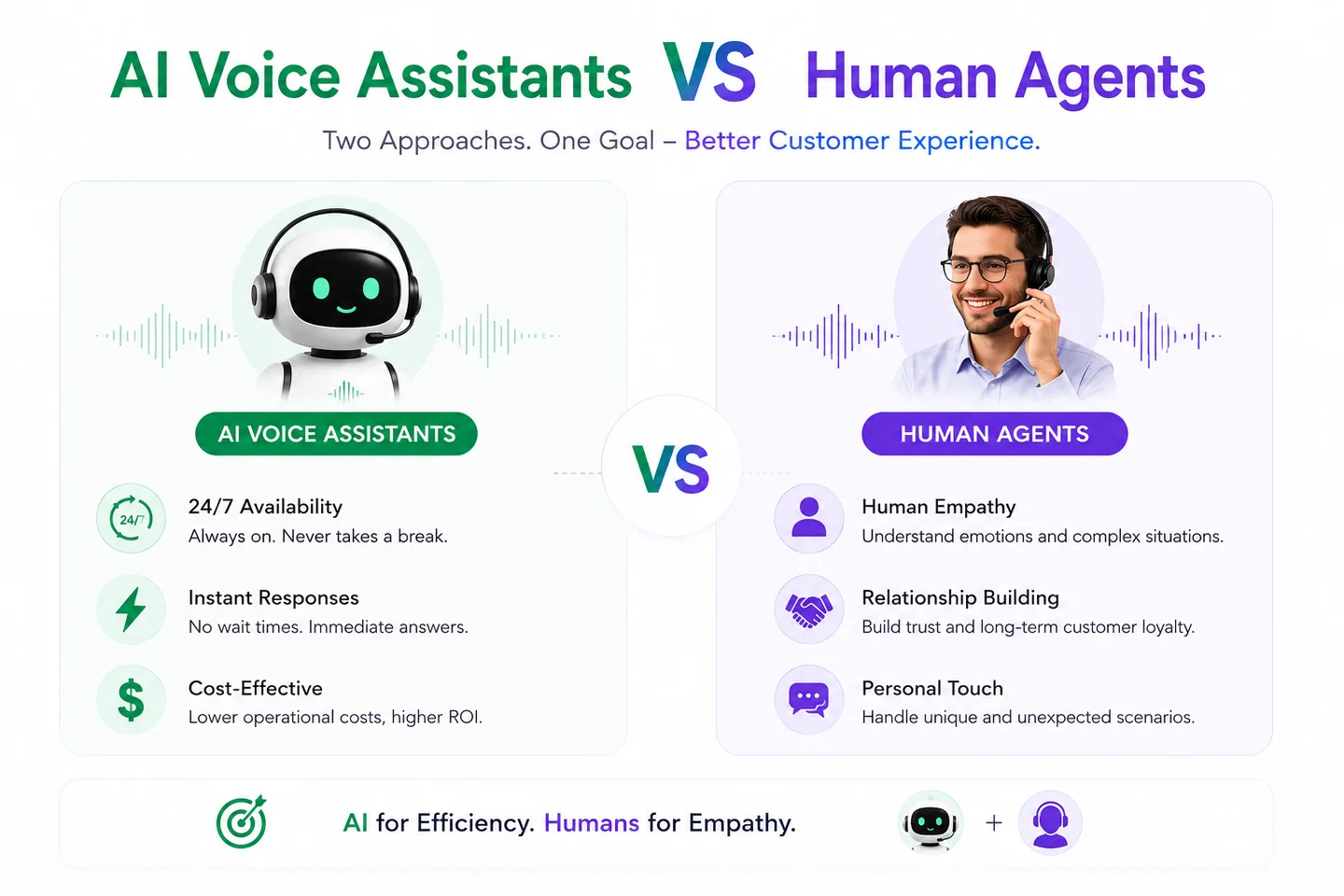
- 1. 24/7 Availability: Unlike human agents, AI voice assistants are available round-the-clock, ensuring customers receive support anytime, anywhere.
- 2. Cost Efficiency: Automating routine inquiries reduces the need for extensive human support, cutting operational costs.
- 3. Multilingual Support: AI systems can be programmed to understand multiple languages, catering to diverse customer bases.
Despite these advantages, AI voice assistants have limitations, particularly in handling complex or emotionally charged interactions.
The Human Touch: Why Human Agents Are Still Essential
While AI voice assistants excel at efficiency, human agents bring empathy and nuanced understanding to customer interactions. Here’s why human agents remain irreplaceable:
- 1. Emotional Intelligence: Human agents can empathize with frustrated or distressed customers, offering personalized solutions.
- 2. Complex Problem Solving: Certain issues require critical thinking and decision-making skills that AI systems cannot replicate.
- 3. Relationship Building:Customers often value the reassurance of speaking to a real person, which builds trust and loyalty.
However, relying solely on human agents can lead to higher costs, longer wait times, and inconsistent service quality.
Striking the Perfect Balance
To deliver the best customer experience, businesses should adopt a hybrid model that combines the strengths of AI voice assistants and human agents. Here’s how:
Automate Routine Tasks
AI voice assistants are ideal for handling repetitive inquiries such as account balances, order tracking, and FAQs. By automating these tasks, businesses free up human agents to focus on more complex issues.
Seamless Handoff Between AI and Humans
Ensure that AI voice systems can seamlessly transfer calls to human agents when needed. For instance, if a customer’s query requires emotional support or advanced troubleshooting, the AI should recognize this and connect them to a live agent.
Continuous Training for AI and Humans
Regularly update AI systems to improve their understanding of customer language and intent. Simultaneously, train human agents to work effectively alongside AI tools, enhancing collaboration.
Leverage Data Insights
AI voice assistants can provide human agents with valuable data during handoffs, such as customer history and sentiment analysis, enabling agents to deliver more personalized solutions.
Focus on Customer Preferences
Offer customers the choice to interact with AI or a human agent. Some customers may prefer the speed of AI, while others might opt for the empathy of a human connection.
Real-World Success Stories
Many companies have successfully implemented hybrid models:
- 1. E-commerce Giants: Brands like Amazon use AI voice assistants to handle order inquiries, escalating complex issues to human agents.
- 2. Banking Sector: Banks deploy AI systems for routine transactions while relying on human agents for financial advice.
- 3. Healthcare Providers:AI voice assistants handle appointment scheduling, while human agents address sensitive health concerns.
Conclusion
AI voice assistants and human agents each bring unique strengths to customer service. By combining their capabilities, businesses can achieve the perfect balance, enhancing efficiency without compromising on empathy. This hybrid approach not only improves customer satisfaction but also optimizes operational costs, making it a win-win solution.
As AI technology continues to evolve, the key lies in leveraging it as a complementary tool rather than a replacement for human agents. By doing so, businesses can create a customer service experience that is both efficient and deeply human.